

Uncategorised
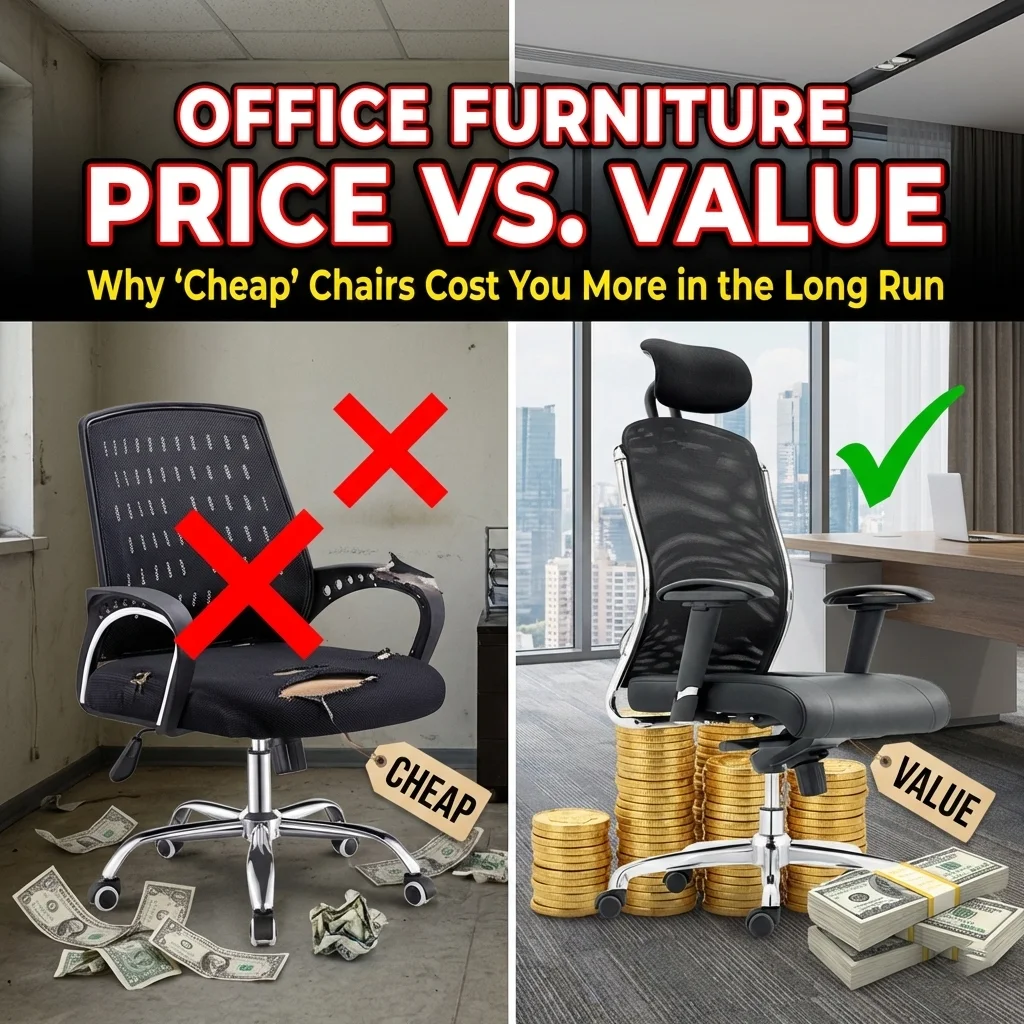
Office Furniture Price vs. Value: Why “Cheap” Chairs Cost You More in the Long Run
Office Furniture Price vs. Value: Why “Cheap” Chairs Cost You More in the Long Run
We’ve all seen them—the “budget” office chairs lined up along the roadside in Ojota or listed for impossibly low prices on generic marketplaces. When you’re trying to manage a business budget or set up a home office in Lagos, a ₦45,000 chair looks a lot more attractive than a premium ergonomic investment.
But here is the truth most furniture sellers won’t tell you: Cheap office chairs are not actually cheap. They are just a delayed expense.
In 2026, smart Nigerian professionals are moving away from “disposable” furniture and embracing Value-Based Buying. Here is why spending a bit more today will save you hundreds of thousands of Naira over the next few years.
1. The 18-Month Replacement Cycle
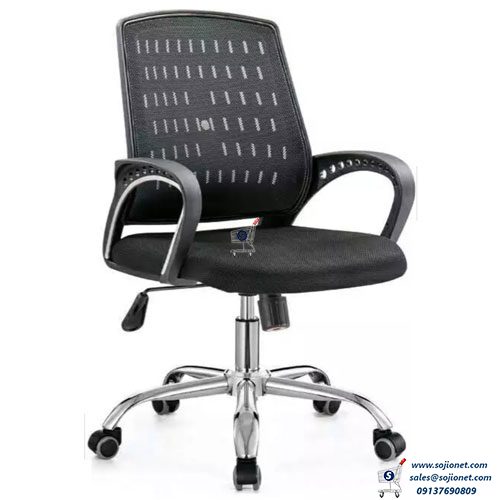
A standard “cheap” chair is usually built with low-grade plastic, thin foam, and basic gas lifts. In the busy Nigerian office environment, these components fail quickly.
The “Sinking” Feeling: After 6 months, the gas lift fails, and your chair won’t stay up.
The “Flat” Cushion: The foam flattens out, leaving you sitting on what feels like a hard board.
The Result: You end up buying a new “cheap” chair every 18 months. Over 5 years, you’ve bought three chairs. A single high-quality Sojionet chair lasts 5–10 years, costing you significantly less per year.
2. The Productivity Tax
If your staff is spending 20% of their day shifting in their seats, stretching their backs, or standing up to get relief from a hard chair, you are losing money. Almost all cheap chairs are not ergonomic, you loose a lot of productive time due to back pain, neck pain, fatigue and many more.
The Math: If an employee earning ₦200,000/month loses just 1 hour a day to discomfort-related distractions, that is roughly ₦25,000 worth of wasted productivity every month.
The Value: A high-quality ergonomic chair keeps your team focused and energized, paying for itself in recovered work hours within the first 6 months.
3. The Medical Bill Reality
In Nigeria, we often say “Health is Wealth.” Yet, many people spend more on their smartphones than on the chair where they spend 8 hours a day.
Poor seating leads to:
Chronic lower back pain (Sciatica).
Neck and shoulder tension.
Costly physiotherapy sessions or orthopedic consultations.
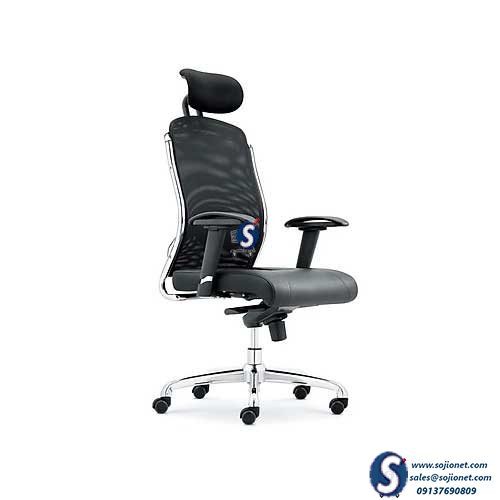
Investing in a chair with adjustable lumbar support and proper tilt mechanisms isn’t just a furniture purchase; it’s health insurance for your spine.
4. Professional Image and “Vibe”
First impressions matter in Lagos business circles. If a high-value client walks into your office and sees peeling leather or a wobbly, squeaky chair, it reflects on your brand’s attention to detail.
Premium furniture communicates stability, success, and care for your employees. It tells your clients that you invest in quality.
Calculating the “Cost Per Use”
To see the real value, look at it this way:
Cheap Chair: ₦130,000 ÷ 1.5 years = ₦87,000 per year.
Sojionet Ergonomic Chair: ₦280,000 ÷ 6 years (minimum) = ₦47,000 per year.
When you look at the long-term math, the “expensive” chair is actually the more affordable option.
Conclusion: Stop Buying Twice
The old saying goes: “If you buy cheap, you buy twice.” In the case of office furniture, you usually buy three or four times.
Break the cycle of replacing broken chairs and dealing with backaches. Choose furniture that is built for the long haul, designed for the human body, and backed by a company that understands the Nigerian workspace.
Invest in quality that lasts. Explore Sojionet’s high-value Ergonomic chair Collection here.
